Why Setting High Expectations in the Stock Market Is Fatal: Evidence, Examples, and Investor Wisdom
by admin - 28-02-2026 Setting high expectations in the stock market is one of the most common yet least discussed reasons for poor long-term returns. The danger does not lie in ambition, but in misjudging how markets actually behave.
When expectations are disconnected from reality, they trigger behavioural responses that systematically destroy wealth. Decades of data, academic studies, and real-world investor outcomes clearly support this view.
Even Benjamin Graham, the father of value investing, warned investors that, “The investor’s chief problem—and even his worst enemy—is likely to be himself.”
Expectations are the mechanism through which that enemy operates. Returns Are Anchored to Economic and Business Fundamentals What investors earn from the stock market is ultimately a reflection of economic reality. Returns are not generated by optimism or expectations but by corporate earnings.
Companies can earn only as much as customers are willing and able to spend, and customer spending is constrained by income growth, employment conditions, credit availability, and overall economic confidence.
If economic growth is moderate, corporate earnings cannot sustainably grow at an extraordinary pace. Markets may temporarily disconnect from this reality, but over time, prices realign with earnings.
CAPITAL ALLOCATION FOLLOWS THE COST OF CAPITAL
A useful way to understand return limitations is to view markets from a businessman’s perspective. An entrepreneur invests capital only when expected returns exceed the risk-adjusted cost of capital.
If the cost of borrowing is around 8 percent, a businessman may invest in a plant expecting a return of 15–16 percent to compensate for operational risk, competition, and economic uncertainty. These expectations are grounded in real-world constraints, not in market narratives or speculative optimism.
WHY BUSINESSES CAN NOT DELIVER EXCESSIVE EQUITY RETURNS
If a business is being set up with the expectation of earning 15–16 percent on capital, it raises a critical question: how can that same business consistently generate 30–40 percent returns for shareholders? Such outcomes are mathematically and economically unsustainable.
Short-term spikes in stock prices may create the illusion of extraordinary returns, but these are usually driven by valuation expansion rather than a fundamental surge in profitability. Valuation-led returns merely pull future gains into the present, reducing returns later.
MARKET RETURNS CONVERGE TO EARNING REALITY
While certain companies or sectors may deliver exceptional returns due to innovation or structural advantages, these a re exceptions. At the aggregate level, stock market returns converge towards underlying earnings growth and return on capital.
Extraordinary performance by a few companies is offset by average or declining performance elsewhere. Expecting returns far above what businesses can economically earn does not create wealth—it increases the risk of disappointment and poor decision- making.
In the long run, investors earn what businesses can realistically generate after accounting for demand, competition, and capital costs. Consider long-term market data first.
Over the past 100 years, the US equity market has delivered roughly 9–10 percent annual nominal returns, but those returns have never been smooth.
According to JP Morgan’s Guide to the Markets, in nearly one out of every three calendar years, markets delivered negative returns, even while compounding strongly over decades. Investors who expect steady double-digit gains every year are therefore guaranteed to be disappointed—and disappointment is the seed of poor behaviour.
HIGH EXPECTATION SEED TO BIG MISTAKES
When investors expect markets to rise steadily, even a routine correction feels like a crisis. Historically, equity markets correct 10 percent or more almost once every year. Yet each time, investors react as if something has permanently broken.
In March 2020, global markets fell over 30 percent in a matter of weeks due to Covid-19 fears. Many investors sold high-quality stocks and equity funds expecting further collapse.
Within the next twelve months, markets recovered sharply, and those who exited locked in losses while missing one of the strongest rebounds in history. Investment legends have repeatedly warned against expectation-driven behaviour.
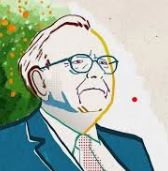 Warren Buffett famously said,
“The stock market is a device for transferring money from the impatient to the patient.”
Impatience is often the result of expecting returns to arrive faster or more smoothly than they ever do. Behavioural finance research explains why this disappointment is so damaging.
The landmark study by Barber and Odean (2000) showed that individual investors who traded frequently underperformed the market by around 6 percent annually, largely due to overconfidence and reactionary decision-making.
High expectations fuel this overconfidence. When reality fails to match expectations, investors trade more, not less—trying to “fix” returns that were never broken to begin with.
Howard Marks reinforces this idea, noting, “Being too far ahead of your time is indistinguishable from being wrong.”
High expectations push investors to act early, aggressively, and often incorrectly. The tech bubble of 1999–2000 is a classic example. Investors expected technology stocks to deliver extraordinary growth indefinitely.
Nasdaq valuations implied future earnings growth that was mathematically impossible. When expectations collapsed, the index fell nearly 78 percent from peak to trough.
Importantly, many fundamentally strong companies survived, but investor capital did not—because expectations forced people to buy at extremes and sell in despair.
LOW EXPECTATION ARE EQUALLY DANGEROUS
Expectations that are too low also inflict damage, though less visibly. Dalbar’s long- running Quantitative Analysis of Investor Behavior shows that over 30-year periods, the average equity investor underperformed the index by 3–4 percent annually.
One key reason was staying out of the market during volatile periods due to fear. Missing just the 10 best market days over 20 years can cut total returns by more than half, according to multiple market studies.
Low expectations lead investors to avoid volatility, but volatility is inseparable from equity returns. These set of investors see the stock market as a disaster waiting to happen or, worse, as a form of gambling.
To them, markets are driven purely by speculation, manipulation, and luck. Volatility is interpreted as danger rather than as a normal feature of risk-taking. As a result, they either stay completely away from equities or participate only reluctantly, exiting at the first sign of turbulence.
Their fear is not entirely unfounded, but it is often exaggerated by past crashes and short-term noise.Investment legends have long warned against this mindset.
Peter Lynch famously said,
“Far more money has been lost by investors trying to anticipate corrections than lost in the corrections themselves.”
John Bogle echoed this sentiment, noting, “Time is your friend; impulse is your enemy.”
Low expectations turn time into an enemy by preventing investors from staying invested long enough for compounding to work. Fear in markets is not irrational; markets are genuinely uncertain.
But when fear becomes a permanent expectation rather than a temporary emotion, it quietly erodes wealth. The tragedy of low expectations is that investors often believe they are being prudent, when in reality they are taking a different kind of risk—the risk of never allowing capital to grow.
The most common mistake is holding excessive cash for long periods. Fear of loss dominates fear of missing out. Purchasing power erodes due to inflation, and long- term compounding never begins.
For instance, after the 2008 global financial crisis, many investors stayed out of equities for years, despite markets delivering strong returns in the decade that followed. By the time confidence returned, valuations were already higher.
Low expectations push investors towards fixed deposits, low-yield bonds, or capital- protected products, regardless of long-term goals. That illusion of safety could lead to negative real returns after inflation and taxes.
Such investors in reality, they are exposing themselves to a different, less visible risk—the risk of never participating meaningfully in economic growth.
By treating volatility as danger instead of as the price of return, they turn caution into a behavioural trap. Over time, it is not market crashes but fear-driven decisions that do the greatest damage to their wealth.
History, data, and experience all point to one conclusion: markets do not destroy wealth, investors do—through behaviour driven by flawed expectations. When expectations rise too high or fall too low, discipline collapses.
It is thus stock market demands emotional resilience and prudently setting right expectations. Remember, in the stock market, expectations work like this.
If you ask for too much, you are penalised by disappointment, poor decisions, and eventual losses. If you ask for nothing, you are penalised by missed compounding, inflation, and stagnation.
_________________________________________________________________
10-Days Certification Course on "Crowd Psychology"
(Read online 5 minutes a day)
Understand how people think, feel & act in groups — and transform your leadership, strategy, and decision-making.
🧠 You Will Learn:
- 🧍♂️ Crowd behaviour: how they think and act together
- 😨 How crowd emotions turn into crisis
- 🙌 How to better handle crowds and large social gatherings
- 🎯 What influences a crowd and how it’s shaped
- 🗣️ How great leaders and social groups shape crowd thinking
- 🚫 How not to get trapped in crowd behavior
- 💡 Discounted price of just Rs 499 (get refund if you do not like course)
Enroll now 👉 Click here
.jpg)
📘 This Course Includes:
- 🧩 10 chapters only (English)
- 📲 1 chapter delivered every 3 days via WhatsApp/Email
- ⏱️ Just 15 mins/day to complete the course in 30 days (Total ~1.5 hrs)
- 📱 Learn on Mobile/Desktop
- 🏅 Certificate of Completion on Day 30
💰 ₹ 2999 pay now Only! 499 RS🔥🔥🔥🔥
👥 Who Should Attend:
📈 Stock market investors, 🎓 Students, 👨💼 Team Leaders, 🎯 Marketers, 🏢 Business Owners.
✅ Real-life Examples | Designed for Busy People | Certificate for your LinkedIn/Resume
🔗 Enroll now 👉 Click here
100Bagger: Eagle Post
Aimed at compounding knowledge and wealth, we bring to you best stories and resources every month handpicked by our 100 Bagger team.
- Bonus: You'll also receive a FREE COPY of our latest ebook, "MARKET CYCLES: HOW THEY WORK AND HOW TO PROFIT FROM THEM"
- E-copy of Highlighted 45 Page Detailed Naval Ravikant Interview
- Book Summary "The 4-Hour Work Week"