What Is Value Investing? Book Notes: A Practical Framework for Rational, Disciplined, and Intelligent Investing
by admin - 28-03-2026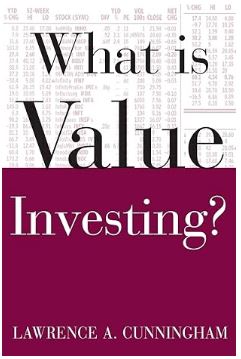 What Is Value Investing? by Lawrence A. Cunningham is a concise yet deeply structured guide to understanding value investing as a discipline, not a shortcut or mechanical formula.
The book demystifies the philosophy popularized by Benjamin Graham and Warren Buffett, translating it into practical thinking tools suitable for modern investors.
Cunningham emphasizes that value investing is grounded in rational analysis, business understanding, and motional control—rather than price charts, tips, or speculation.
Lawrence Cunningham is a respected corporate governance scholar, legal academic, and investment thinker.
He is widely known for editing The Essays of Warren Buffett and for his long association with Berkshire Hathaway’s investment philosophy.
His strength lies in explaining complex financial ideas in clear language while preserving their intellectual rigor.
In this book, Cunningham focuses less on stock picking tricks and more on developing the correct mental framework for intelligent investing.
The book’s central message is that value investing is about buying quality businesses at prices below intrinsic worth, with a margin of safety, and holding them patiently.
It integrates financial analysis, behavioral finance, and long-term thinking into a coherent investment worldview.
1. Today’s Investing Styles
Cunningham opens the book by demystifying the different investing styles that dominate modern financial markets, noting that the majority of participants are not actually ―investors‖ but speculators.
The problem begins with how people define risk: most follow price movements rather than business fundamentals. Some chase momentum, hoping that rising stocks will continue rising. Others follow narratives—what is trending on TV, social media, or market chat rooms.
This behavior creates waves of short-term decisions that overwhelm long-term thinking. In this chapter, value investing is introduced as the antidote to speculative behavior.
“THE MARKET REWARDS PATIENCE FAR LESS FREQUENTLY THAN SPECULATION, BUT FAR MORE RELIABLY OVER TIME.”
“MOST MODERN INVESTING STYLES FOCUS ON PREDICTING PRICE MOVEMENTS RATHER THAN UNDERSTANDING VALUE, WHICH EXPLAINS THEIR FRAGILITY DURING MARKET STRESS.”
Instead of predicting short-term price fluctuations, valueinvestors analyze intrinsic value—the real worth of a business based on cash flows, durability, and long-term competitiveness.
Cunningham argues that most investment losses occur because people confuse price with value, and because they react emotionally to markets rather than rationally to business quality.
He explains that today’s markets include passive indexers, day traders, algorithm-driven funds, and thematic investors. Most rely on forecasts, modeling momentum, or reacting to news.
But a value investor behaves differently: they treat a stock as ownership in a real business, judge it based on fundamentals, and exercise patience, even when the market behaves irrationally.
This chapter sets the stage for the book’s central idea: investing is not about predicting markets but understanding businesses. Value investing stands out because it is grounded in logic, discipline, and economic reality—not speculation, guesswork, or excitement.
It remains durable across generations precisely because human behavior has not changed. When speculation becomes dominant, mispricing grows— and value investors gain the opportunity to buy great companies at attractive prices.
2. Value Investing Traditions
Cunningham traces the roots of value investing back to Benjamin Graham, the father of modern security analysis. Graham taught that investors must separate investment from speculation, focus on intrinsic value, and always insist on a margin of safety.
His philosophy was revolutionary in an era when most investors traded on stories and tips. The tradition evolved under Warren Buffett, who preserved Graham’s principles but modernized them.
Buffett realized that in a dynamic economy, investing purely in statistically cheap stocks (like those trading below book value) is not enough.
Instead, the best opportunities come from buying wonderful companies at fair prices, not ―fair companies at wonderful prices. Cunningham explains that value investing traditions survive because they are rooted in economic fundamentals rather than market fashion.
“The tradition of value investing is not about formulas, but about judgment.”
Whether markets are euphoric or depressed, intrinsic value remains the anchor. Over decades, markets change—technology grows, regulations shift, and new financial instruments emerge— but the logic behind value investing stays universal: look for real value beneath emotional pricing.
He also highlights the intellectual framework that value investing provides:
- a business-owner mentality
- skepticism toward hype
- patience when others are impatient
- clear reasoning grounded in financial reality
Cunningham reinforces that value investing traditions are not rigid formulas but guiding philosophies. They encourage thoughtful analysis instead of mechanical rules. This makes the approach resilient, adaptable, and enduring.
By placing the reader in the lineage of Graham and Buffett, Cunningham prepares them for the mindset required to apply value-investing wisdom in a modern, noisy, and often speculative market.
3. Circle of Competence
The Circle of Competence is one of the book’s most practical and life-changing ideas. Cunningham argues that the biggest investment mistakes come not from lack of intelligence but from investing in businesses we do not truly understand.
The Circle of Competence defines the boundary of what we can explain clearly: how a business makes money, what drives its customers, what its economic risks are, and what could destroy it.
The key is not the size of the circle but the honesty with which it is drawn. Many investors pretend to understand industries because they seem exciting—biotech, fintech, crypto currency, cloud services—but enthusiasm is not competence.
Cunningham warns that complexity often hides risk, and investors who venture outside their circle expose themselves to unpredictable dangers.
Staying within the circle encourages disciplined thinking.You analyze less, but you understand more deeply. Over time, your circle expands naturally as you study and experience more, but forcing expansion leads to costly errors.
The circle also filters opportunities: if a business cannot be understood simply, it cannot be valued reliably. Cunningham further explains that this principle differentiates investors from speculators.
Speculators assume prices reflect knowledge. Investors assume value reflects understanding. If you cannot explain the business to a teenager, you are not competent in that domain. In practice, the Circle of Competence reduces risk,increases conviction, and prevents emotional decisionmaking.
It also creates a durable competitive advantage: most investors wander outside their circle; few remain disciplined enough to operate within it.Long-term success belongs to those who know what they
know—and, equally importantly, what they don’t.
4. Financial Analysis
 Cunningham identifies financial analysis as the backbone of value investing. While stories and narratives may influence market behavior in the short run, financial statements reveal the truth about a company’s economics over the long run.
He emphasizes that understanding numbers is not about memorizing formulas but about learning to interpret the economic story behind the figures.
The chapter breaks financial analysis into core components: earnings power, cash flows, balance sheet strength, competitive advantage (moat), and management integrity. Each element tells a part of the story.
For example, earnings show profitability, but earnings alone can be manipulated; cash flows confirm whether profits translate into liquid strength.
A strong balance sheet reflects resilience—companies with low debt and high liquidity are better positioned to survive downturns and exploit opportunities.
“Earnings can be interpreted; cash flows must be confronted.”
Meanwhile, moats reveal how durable a business is, ensuring that strong earnings can persist over time. Cunningham stresses that management quality is often underestimated but critically important.
Good managers allocate capital wisely, maintain transparency, and avoid financial engineering that artificially inflates short-term numbers. Poor managers destroy value through overexpansion, excessive debt, or misleading reporting.
“Management integrity is an asset that never appears on the balance sheet.”
A key insight in this chapter is that numbers should not be read in isolation. A single year’s profit means little without understanding the trend. Cash flow must be examined relative to investment needs. Debt must be evaluated against earnings stability.
The goal is not to find perfect companies but to find understandable businesses with predictable financial patterns. Financial analysis transforms investing from guesswork into disciplined evaluation.
It empowers investors to separate solid businesses from fragile ones and helps determine whether market prices reflect economic reality—or emotional noise.
5. Compounding Principles
Cunningham calls compounding the ―silent superpower of value investing. It works invisibly at first,then explosively over long horizons. This chapter highlights why consistency, patience, and long-term holding create extraordinary results that shortterm traders can never match.
Compounding works when profits generated by a business are reinvested to produce more profits—year after year. High-quality companies with strong returns on capital accelerate this process because they convert each dollar of earnings into even greater earnings in the future.
“Time favors businesses that earn high returns on capital.”
But this force only works if the investor avoids interrupting it through unnecessary trading, market timing, or emotional reactions to volatility.
Cunningham explains that compounding is not just mathematical—it's behavioral. It rewards investors who resist fear during market declines and avoid greed during market euphoria.
Instead of chasing fast returns, value investors seek durable, stable compounding engines: businesses with predictable cash flows, long product lifecycles, and competitive advantages that sustain profitability for decades.
He also points out that compounding applies to knowledge, not just money. The more an investor studies businesses, accounting, and markets, the stronger their analytical ability becomes— making future decisions more profitable.
“Interrupting compounding is the costliest mistake investors make.”
One of the most powerful messages in this chapter is that compounding doesn’t require brilliance; it requires not getting in your own way.
Investors destroy compounding through impatience, frequent buying and selling, or abandoning principles during emotional extremes.
Ultimately, Cunningham argues that the true magic of value investing lies not in statistical cheapness but in owning quality businesses long enough for compounding to work its magic.
The investor who lets compounding run its course wins— not because they are the smartest, but because they are the most disciplined.
6. Value Measurements
In this chapter, Cunningham explains how to measure value—the heart of value investing. While many investors rely on price charts, predictions, or intuition, value investors rely on careful estimation of intrinsic value, which is the true economic worth of a business based on its future cash flows, assets, and stability.
He emphasizes that valuation is not a precise science but a thoughtful estimation. The goal is not perfect accuracy but reasonable confidence.
“VALUATION IS AN ESTIMATE SURROUNDED BY UNCERTAINTY.”
“A MARGIN OF SAFETY IS THE DIFFERENCE BETWEEN INVESTING AND GAMBLING.”
Instead of calculating exact numbers, value investors identify a range of plausible values and buy only when the market price falls well below the lower end of that range. This difference is  known as the margin of safety, one of the most important concepts in value investing philosophy.
Cunningham discusses common valuation tools: earnings multiples, discounted cash flow (DCF), book value, and normalized cash flows. But he cautions against relying on any single method.
Each business requires a different lens. Asset-heavy businesses may be valued through book value; cash-flow-rich companies through DCF; stable consumer companies through earnings power. The key is to match the valuation method to how the business actually creates value.
A central insight of the chapter is that valuation requires understanding, not formulas. If an investor cannot explain where a company’s cash will come from in 5–10 years, they cannot estimate value.
This is why valuation connects directly to the Circle of Competence: you cannot value what you do not understand. Cunningham reinforces that value measurement protects investors from hype and emotion. By focusing on intrinsic worth, investors remain grounded even when markets behave irrationally. This chapter teaches that valuation is both art and discipline—anchoring decisions in rational analysis rather than speculative enthusiasm.
7. Discount Rates
Discount rates are one of the most important yet misunderstood foundations of value investing. When investors calculate the present value of a business, they essentially ask: ―How much are future cash flows worth today? Cunningham explains that this question cannot be answered without selecting an appropriate discount rate.
A discount rate reflects the trade-off between risk, time, and opportunity cost. Higher-risk businesses deserve higher discount rates because their future cash flows are less certain.
Conversely, stable and predictable companies justify lower discount rates because the probability of receiving the projected cash flows is greater. Cunningham emphasizes that investors must approach discount rates with humility.
“Every valuation is a statement about time and risk.”
Long-term forecasts are inherently uncertain, and compounding this uncertainty with unrealistic discount assumptions can distort valuations. The longer the forecast horizon, the more sensitive valuations become to even small changes in the discount rate.
A 1% shift in the discount rate can dramatically alter the valuation of a company projected decades into the future. Understanding discounting also trains investors to differentiate between a good company and a good investment.
“The future may be uncertain, but its cost is not zero.”
Even a wonderful business may be a poor investment if its price already reflects distant, high-growth assumptions discounted at overly optimistic rates. Conversely, an average company with stable cash flows and a reasonable discount rate may offer superior longterm value.
Cunningham argues that mastering discount rates separates investors from speculators. Speculators focus on price momentum and market sentiment. Investors think in terms of cash flows, probability, and present value.
When investors adopt disciplined discounting practices, they gain a rational framework that cuts through noise, hype, and emotional market swings. Ultimately, discount rates teach investors to value time properly and appreciate the cost of risk—core principles at the heart of value investing.
8. Market Prices
 Market prices reflect human behavior as much as they reflect economic reality. According to Cunningham, prices fluctuate because markets are filled with emotional participants—some driven by fear, some by greed, and many by the narratives circulating at any given moment.
The key insight he stresses is that price is information, not instruction. It signals what others are currently willing to pay, but it does not dictate what a business is truly worth.
Cunningham highlights that volatility often frightens inexperienced investors who equate sharp price declines with rising risk. But value investors understand that price movements alone do not determine risk—overpaying does.
A stock that drops 30% may be far less risky after the fall, provided its fundamentals remain sound. Conversely, a stock hitting new highs may be more dangerous if its price disconnects from intrinsic value.
This distinction gives value investors a psychological advantage. When others panic, value investors analyze. When others chase trends, value investors calculate.
Cunningham explains that mispricing—whether excessive pessimism or excessive optimism—is the primary arena where rational investors create wealth.
“Prices move faster than value, which creates mistakes.”
“Volatility is opportunity for the prepared investor.”
The moment the crowd acts emotionally is the moment opportunity appears. He also reminds investors that market prices are temporary, while intrinsic value is enduring.
Over time, price and value tend to converge. The discipline lies in having the patience and conviction to wait for this convergence.
Anchoring decisions on intrinsic worth rather than fluctuating prices allows investors to stay calm during market storms and selective during periods of euphoria.
In essence, Cunningham teaches that understanding prices—not worshipping them—defines the mindset of a true value investor. Markets will always move irrationally in the short term. The rational investor moves only when price diverges meaningfully from value.
9. Frauds and Fantasies
Not all cheap stocks are undervalued. Cunningham warns that some low prices reflect deep, hidden problems— frauds, aggressive accounting, or unrealistic business models designed more to attract investors than to generate profits.
In this chapter, he stresses the importance of skepticism and critical analysis. Investors must distinguish between genuine value and dangerous value traps.
Frauds often hide behind complex financial statements, confusing disclosures, and overly optimistic projections. Companies may inflate earnings, conceal debt, or manipulate revenue streams to project financial strength.
Cunningham urges investors to pay close attention to cash flow, accounting quality, and consistency across financial reports.
When numbers don’t match the narrative, something is usually wrong. ―Fantasies,on the other hand, refer to businesses built on excitement rather than fundamentals.
“Fraud thrives where scrutiny is weakest.”
“Optimism is not a substitute for verification.”
These companies tell big stories about disruption, new markets, or exponential growth but lack evidence of real profitability or sustainable economics.
They thrive on promotional management teams, media hype, and investor enthusiasm—not on cash-generating operations.
Their valuations depend more on belief than on business performance. Cunningham emphasizes that strong governance, transparency, and management integrity matter far more than catchy ideas.
A company with honest leadership and steady, predictable earnings is always preferable to one with grand promises but questionable practices. Investors who ignore governance risk often end up paying the price.
The lesson is simple: value investing demands healthy skepticism. Cheap stocks are sometimes cheap for a very good reason. By focusing on transparency, ethical leadership, and reliable financials, investors avoid traps that lure speculators.
Cunningham’s message is clear—protect your capital first, then seek returns. Detecting frauds and avoiding fantasies is as much a part of value investing as recognizing hidden gems.
10. Chronic Reporting Problems
Chronic reporting problems are one of the clearest warnings that a company may not be a suitable investment for a value-driven portfolio.
Cunningham emphasizes that financial reporting is the primary channel through which management communicates with shareholders.
When this communication becomes unreliable, overly complicated, or intentionally vague, the trust between owners and operators erodes rapidly.
Issues such as repeated earnings adjustments, constant ―one-time charges, and frequent restatements indicate that a company is struggling to present a stable and accurate picture of its financial health.
These patterns often mask deeper operational weaknesses or, in some cases, questionable managerial behavior.
“Reliable reporting is the foundation of rational investing.”
Poor reporting forces investors to make assumptions, reinterpret data, or ― fill in the gaps — a dangerous process that increases the likelihood of error.
Value investors thrive on clarity, consistency, and transparency because these qualities reduce uncertainty and improve the quality of valuation decisions.
A business that cannot present clean, comprehensible numbers usually suffers from weak internal controls, chaotic processes, or a culture that tolerates sloppy disclosure.
“COMPLEXITY IN REPORTING OFTEN HIDES WEAKNESS.”
Cunningham stresses that chronic reporting problems also signal a lack of respect for shareholders. When management repeatedly provides incomplete or confusing information, it shows a disregard for the owners’ need to make informed decisions.
This violates a fundamental principle of value investing: partnership-based stewardship. As a result, seasoned investors avoid companies that require excessive interpretation or detective work.
The best opportunities come from businesses that communicate honestly, openly, and consistently. For value investors, unreliable reporting is not just an inconvenience—it is a dealbreaker.
11. Future Reporting Problems
While many investors focus on analyzing past reports, Cunningham encourages a forward-looking approach that anticipates future reporting issues before they materialize.
Historical data reveals patterns, but the real skill lies in predicting whether a company’s reporting practices are likely to deteriorate.
This requires assessing three critical elements: incentives, governance, and accounting aggressiveness. Incentive structures can significantly influence the quality of financial reporting.
When management bonuses are tied primarily to shortterm earnings or stock price movements, executives may be tempted to stretch accounting rules or delay bad news.
Cunningham argues that investors should examine compensation policies to identify conflicts between management goals and long-term shareholder interests.
“Past honesty does not guarantee future transparency.”
Governance quality is another key predictor. Weak boards, limited oversight, or concentrated power in the hands of a dominant CEO often correlate with opaque reporting.
Strong governance, on the other hand, promotes balanced decision-making, rigorous audits, and ethical behavior. Investors must evaluate whether a company’s board possesses independence, financial literacy, and a willingness to challenge management.
“Prevention is better than forensic analysis after the damage is done.”
Accounting aggressiveness is the third major factor. Companies that consistently push the boundaries of acceptable reporting—using complex revenue recognition, capitalizing questionable expenses, or employing optimistic valuation models—are more likely to face future scrutiny or eventual restatements.
Cunningham’s insight is that future reporting problems can often be prevented by identifying risky patterns early. By assessing incentives, governance, and accounting choices, investors avoid companies heading toward trouble.
This shift from reactive analysis to proactive risk assessment gives value investors a strategic advantage and protects them from costly surprises.
12. Ways to Buy Equities
Cunningham clarifies that value investing is not confined to a single method of owning equities. Whether investors choose direct stock selection, mutual funds, index funds, or structured vehicles, the core principles remain constant.
What matters is not the format of ownership but the discipline with which investments are chosen and managed.
Direct stock investing appeals to those who enjoy deep research and have the time, skill, and temperament to evaluate individual businesses.
This approach allows maximum control but also demands significant effort and emotional discipline. Mutual funds and exchange-traded funds (ETFs) offer diversified exposure to equities, making them suitable for investors who prefer professional management or wish to avoid the complexities of stock picking.
Even within funds, value-oriented managers apply valuation principles, seeking opportunities where market price diverges from intrinsic value. Structured ownership—such as holding companies, separately managed accounts, or partnerships—offers hybrid advantages.
These vehicles allow investors to benefit from professional oversight while maintaining a long-term, disciplined approach aligned with value principles.
Cunningham’s point is simple: there is no single ―correct way to buy equities. The method is flexible; the philosophy is not. Regardless of the vehicle, valuation discipline, patience, and the pursuit of intrinsic value remain at the center of decision-making.
The right approach is the one that enables the investor to apply value principles consistently, comfortably, and without emotional interference. Ultimately, the path matters less than the mindset guiding it.
13. Alternatives to Equities
 Cunningham expands the value investing framework beyond traditional stocks, emphasizing that the core principles apply across asset classes.
Whether investing in bonds, private businesses, real estate, or conservative instruments, the central concepts— intrinsic value, margin of safety, and disciplined analysis— remain relevant.
In bonds, value investing involves assessing creditworthiness, cash flow stability, and the likelihood of repayment. A margin of safety may come from purchasing bonds at a discount or selecting issuers with strong financial health.
Unlike equities, bonds offer fixed returns, making downside protection even more critical. Private businesses also fit within the value philosophy.
Investors can evaluate these opportunities by examining earnings, operational resilience, and competitive dynamics, just as they would with public companies.
Private businesses often provide more direct access to management and operational insights, but they also require a deeper understanding of local markets, customer behavior, and industry nuances.
Conservative investments—such as treasury bills, certificates of deposit (CDs), or money market instruments—may not offer high returns, but they serve as strategic tools in maintaining liquidity and managing risk.
Cunningham notes that value investors must treat all capital as precious. Allocating funds to safe instruments during periods of market overvaluation protects investors from unnecessary risk.
The key takeaway is that value investing is a universal framework, not a stock-specific strategy. It is rooted in rational analysis, patience, and protection of capital.
Whether investing in equities or alternatives, the underlying discipline does not change: seek value, avoid speculation, demand safety, and think long term.
14. Summary of Tenets
Cunningham concludes the book with a powerful summary of the fundamental tenets of value investing—a concise yet profound checklist that captures the mindset required for long-term success. Each principle reinforces the importance of rationality, discipline, and independent judgment.
Think independently
The market is often driven by group behavior, narratives, and emotional reactions.Independent thinking allows investors to see beyond noise and focus on underlying value.
This independence gives investors the courage to buy when others are fearful and resist temptation when optimism peaks.
Stay within competence
Understanding one’s circle of competence is central to value investing. Investors should only commit capital to businesses they fully understand. Staying within competence reduces errors, enhances conviction, and supports long-term holding.
Focus on value, not price
Price fluctuates daily, but intrinsic value evolves slowly. Cunningham emphasizes that investors must anchor decisions on the fundamentals of the business rather than the movements of the stock market.
This shift in focus protects investors from emotional trading.
Demand margin of safety
One of the most important tenets, the margin of safety acts as a buffer against errors in judgment, unexpected events, and market volatility. It ensures that investors buy well below intrinsic value, creating room for mistakes.
Be patient and disciplined Great investments require time to realize their potential. Value investing is not a fast-profit strategy but a long-term philosophy.
Patience and discipline allow intrinsic value to emerge and prevent impulsive decisions. Cunningham’s summary reinforces that value investing is not merely a technique or formula—it is a worldview.
It shapes how investors think, behave, and make decisions across all market conditions, ultimately defining their longterm success.
_________________________________________________________________
10-Days Certification Course on "Crowd Psychology"
(Read online 5 minutes a day)
Understand how people think, feel & act in groups — and transform your leadership, strategy, and decision-making.
🧠 You Will Learn:
- 🧍♂️ Crowd behaviour: how they think and act together
- 😨 How crowd emotions turn into crisis
- 🙌 How to better handle crowds and large social gatherings
- 🎯 What influences a crowd and how it’s shaped
- 🗣️ How great leaders and social groups shape crowd thinking
- 🚫 How not to get trapped in crowd behavior
- 💡 Discounted price of just Rs 499 (get refund if you do not like course)
Enroll now 👉 Click here
.jpg)
📘 This Course Includes:
- 🧩 10 chapters only (English)
- 📲 1 chapter delivered every 3 days via WhatsApp/Email
- ⏱️ Just 15 mins/day to complete the course in 30 days (Total ~1.5 hrs)
- 📱 Learn on Mobile/Desktop
- 🏅 Certificate of Completion on Day 30
💰 ₹ 2999 pay now Only! 499 RS🔥🔥🔥🔥
👥 Who Should Attend:
📈 Stock market investors, 🎓 Students, 👨💼 Team Leaders, 🎯 Marketers, 🏢 Business Owners.
✅ Real-life Examples | Designed for Busy People | Certificate for your LinkedIn/Resume
🔗 Enroll now 👉 Click here
100Bagger: Eagle Post
Aimed at compounding knowledge and wealth, we bring to you best stories and resources every month handpicked by our 100 Bagger team.
- Bonus: You'll also receive a FREE COPY of our latest ebook, "MARKET CYCLES: HOW THEY WORK AND HOW TO PROFIT FROM THEM"
- E-copy of Highlighted 45 Page Detailed Naval Ravikant Interview
- Book Summary "The 4-Hour Work Week"